Surfacing operational risk before it becomes expensive
Construction teams coordinate change orders, documents, subcontractors, budgets, and schedules across a high-volume operating environment. The important information usually exists — but someone has to connect it manually before the business can act. I designed Construct AI as an intelligence layer that watches project information for meaningful exceptions and brings the evidence to the person responsible.

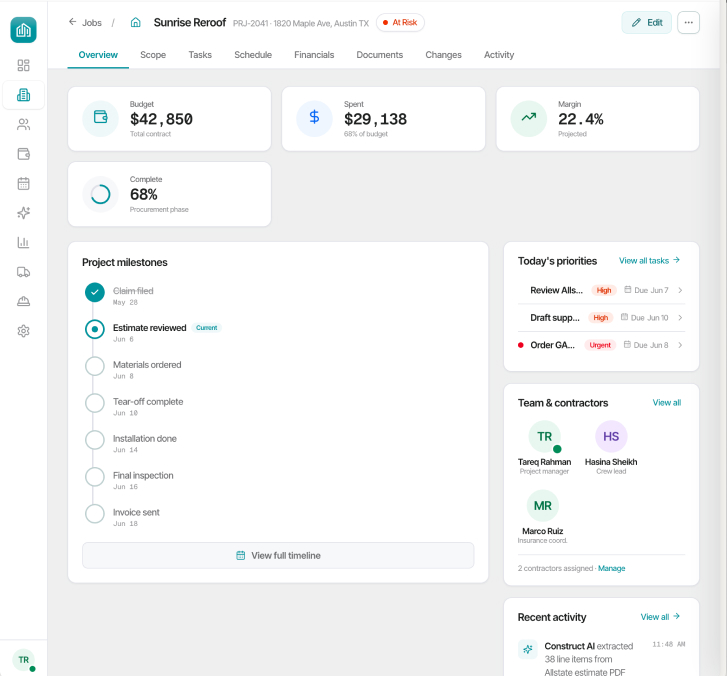
The project overview — one place where project information is watched for consequential exceptions, so the team sees risk while there is still time to act.
The team didn't need another dashboard
The team needed earlier visibility into the issues that could affect cost, revenue, or delivery.
The information was there — spread across change orders, documents, budgets, schedules, and subcontractor activity. But connecting it fell on the project manager, manually, in a high-volume environment where every delay made the signal more expensive.
Change orders could slip through and go unbilled.
Budget variance could appear after the money was already spent.
Project managers spent too much time chasing coordination instead of managing the work.
Evidence was distributed across documents and project activity — and alerts without visible source material were difficult to trust.
And the consequential actions still required experienced human judgment. No alert should have been making those calls on its own.
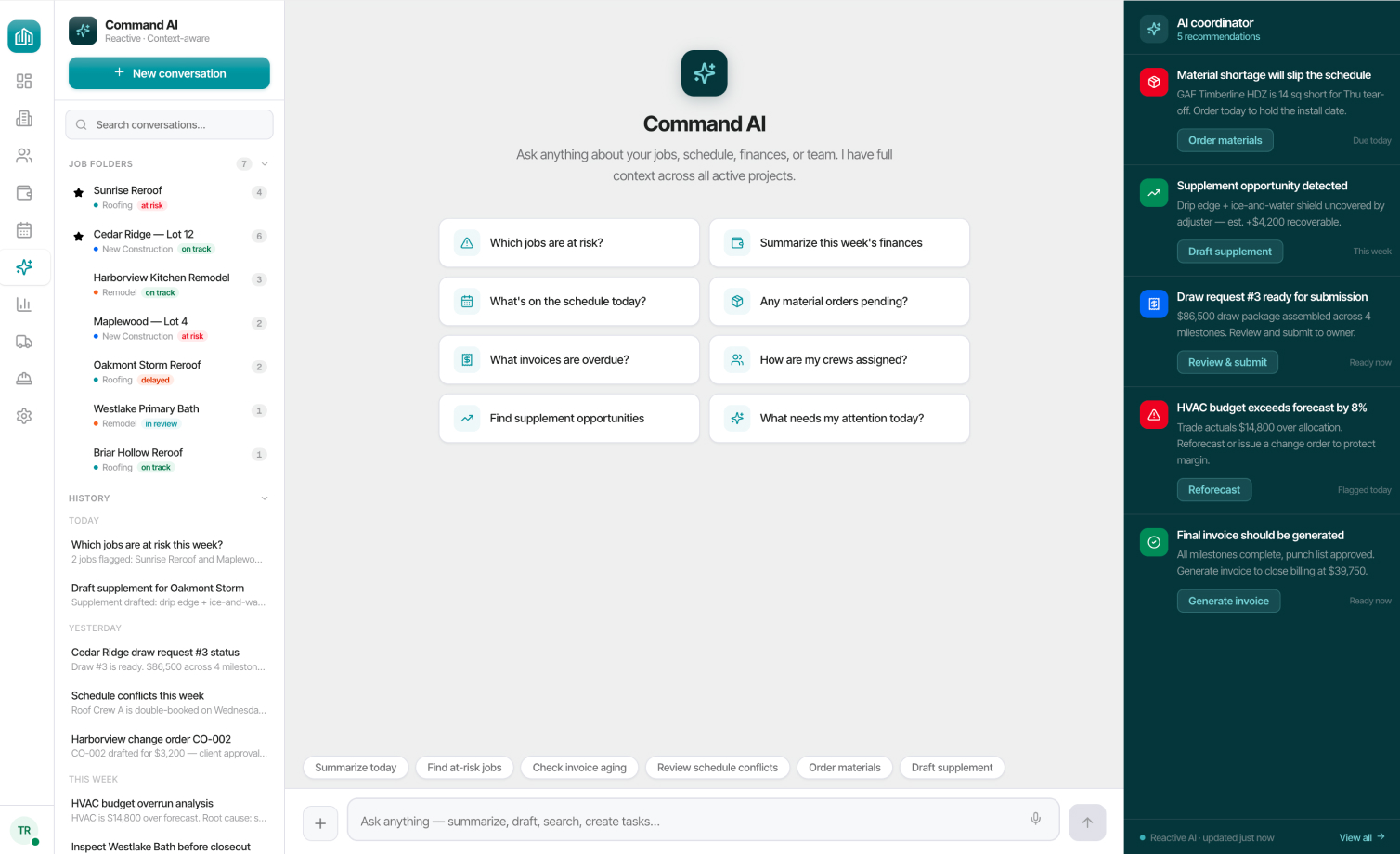
The detected exception — a possible change-order impact or budget variance, surfaced with its evidence instead of arriving as a bare alert.
The reframe
The question wasn't how to automate the decision. Project managers make consequential calls — about cost, negotiation, and delivery — that no system should take off their plate. The question was what the system could do before the decision:
Detect the exception early, show the source, and bring it to the right person while there is still time to act.
That turned the product from passive reporting into earlier, source-backed exception visibility — intelligence the manager can verify, not automation they have to trust blindly.
A designed handoff
- Reading and comparing project information across documents and activity
- Detecting possible change-order impact or budget variance
- Calculating likely impact where the evidence supports it
- Flagging uncertainty rather than hiding it
- Showing the source behind every alert
- Routing the issue to the person responsible
- Validating what the system surfaces against what they know
- Approving the response before anything consequential moves
- Negotiation with subs, clients, and stakeholders
- Operational judgment about what the evidence means on the ground
- Action — the decision stays with the person accountable for it
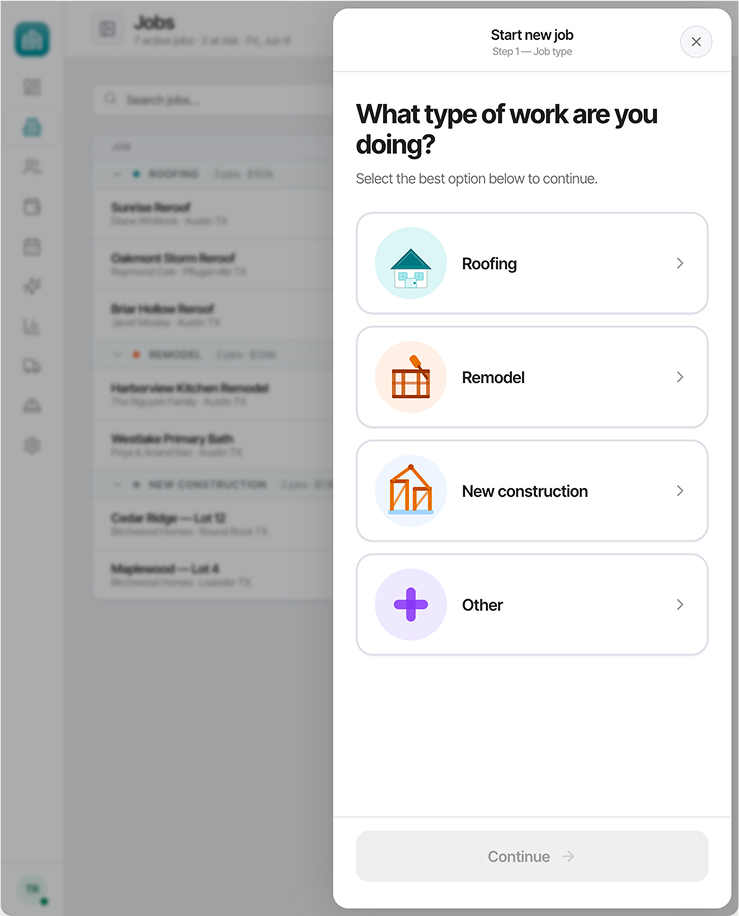
Source evidence attached to the alert — the documents and project activity behind it, shown so the manager can verify before deciding.
One intelligence layer, end to end
I shaped the product strategy, the intelligence-layer concept, the exception and evidence experience, the human review model, and the trust patterns — including a hard line between what the AI observes and what the project manager must decide.
Read and compare project information across documents and activity — the watching the manager no longer has to do by hand.
Identify possible change-order impact or budget variance early, while the response can still change the outcome.
Calculate likely impact where the evidence supports it — and flag uncertainty openly where it doesn't.
Show the source behind the alert, so trust comes from verifiable material rather than a confident-looking flag.
Route the issue to the person responsible, with the evidence attached — not into a queue nobody owns.
Preserve human validation, approval, negotiation, and action — the decision stays with the accountable person.
Human validation and approval — the review state where the project manager confirms the response before anything consequential moves.
Trust is showing the source
Alerts without visible source material are difficult to trust — and in construction, acting on an unverifiable flag can be as expensive as missing the issue entirely. So every exception in Construct AI carries its evidence with it: the documents and project activity it came from, shown where the manager can check them.
Where the evidence doesn't support a firm number, the system says so. Flagging uncertainty is part of the design — a hedged guess presented as fact would break the trust the whole layer depends on.
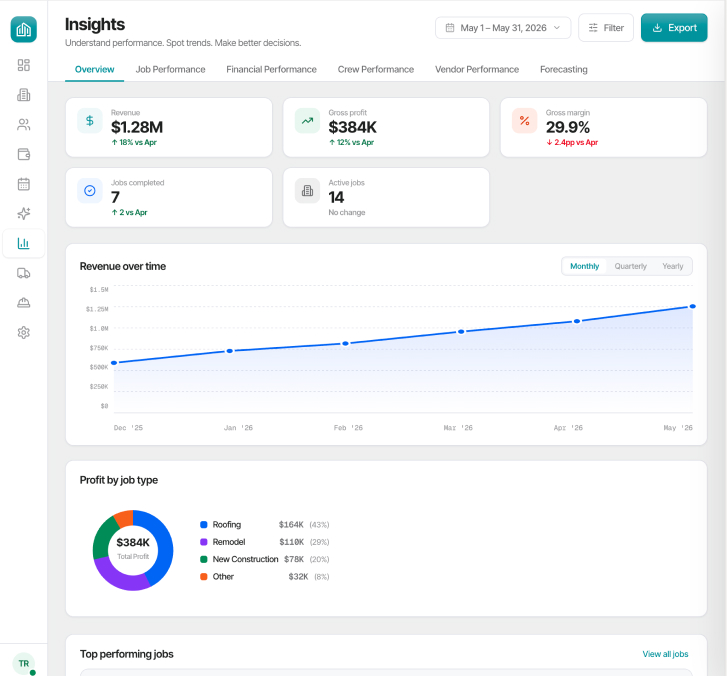
Impact and uncertainty, presented together — what the evidence supports is calculated; what it doesn't is flagged, not hidden.
What changed
The system reframes project intelligence from passive reporting into earlier, source-backed exception visibility. Instead of reports the manager has to assemble and interpret, the consequential exceptions arrive with their evidence — while there is still time to act on them.
It reduces the need for a project manager to become the manual integration layer across every document and system — without automating away the validation, negotiation, and judgment that make the role matter.
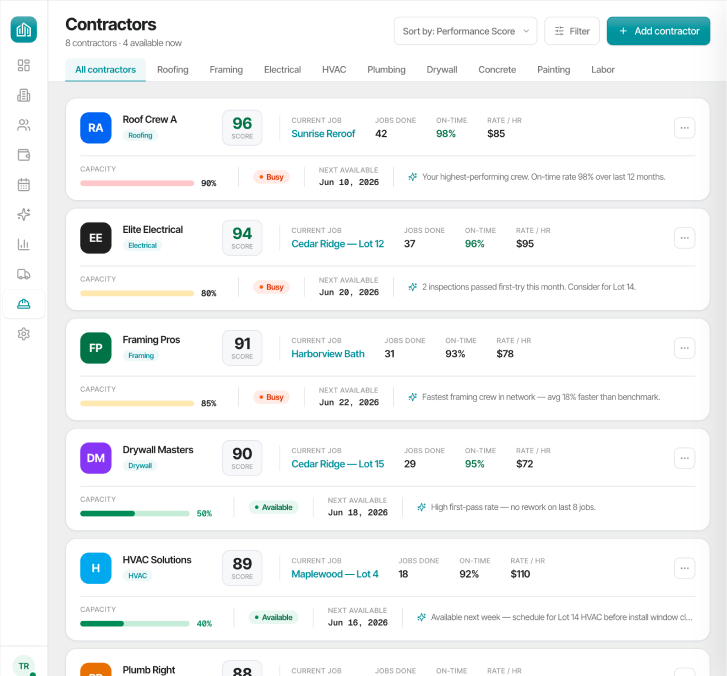
The coordination view — project information connected so the exception reaches the responsible person with its evidence, instead of waiting for someone to chase it down.
What exists today
Construct AI is in beta, with live core workflows and verified roofing-document extraction in use. That is the claim I can stand behind — and where this case study stops.
No recovery totals, no detection-accuracy figures, no broad operational outcomes until those claims are verified. A beta earns trust by describing exactly what is working — nothing more.
What this taught me
Timing is the product. The information usually existed — the cost came from surfacing it late. Earlier visibility into the same facts is worth more than any new report.
An alert without a source is a rumor. Evidence the manager can verify is what turns detection into something the business will act on — showing the work is the trust model.
Uncertainty belongs in the interface. Calculating likely impact where the evidence supports it — and flagging it openly where it doesn't — keeps the system honest about what it knows.
The person stays the integration point that matters. Removing the manual chase across documents is the win; removing validation, negotiation, and judgment would be the failure. The design has to know which is which.
Construct AI applies the operating principles behind Seamless Agent OS to construction operations: intent guides the work, context persists across documents and activity, the system prepares the exception while the person decides, and uncertainty stays visible. Where Agent OS coordinates a fleet of workers, Construct AI watches the project for what needs a manager — both keep the consequential decision with the human.